
Machynlleth Street Trees - Case Study
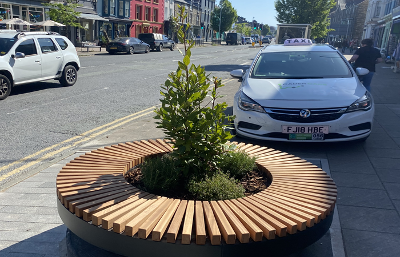
Enhancing a Historic Town Centre
Rooted in Machynlleth's heritage, this project blends community input and expert design to create a greener, safer high street, honouring the past while supporting biodiversity and wellbeing for the future.
Overview
Powys County Council, working with the North and Mid Wales Trunk Road Agent (NMWTRA) and Welsh Government, delivered a street tree improvement scheme in Machynlleth town centre. The project aimed to restore and enhance the town's green character while improving safety and creating better conditions for trees to thrive.
The Challenge
The first street trees in Machynlleth date back to the 1870's, planted as part of the town improvements connected with the building of the Castlereagh Memorial Clock Tower. The towns people raised funds for the clock (whose foundation stone was laid on 15 July 1874) and remaining money was used to plant trees along the nearby streets. These must have eventually failed and 30 more were planted in the 1980s. Due to planting constraints and a lack of maintenance many deteriorated over time, and 40 years later roots were lifting pavements, trees were struggling to grow, and some posed safety risks. Located within a conservation area and a busy market street, the required renewal and replacement scheme needed to balance heritage, accessibility, and community needs and promote future tree longevity.
Our Approach
The team carried out detailed surveys, feasibility studies, and consultations to design a solution that respected the town's character. Innovative underground systems were introduced to give new trees space to grow without damaging pavements or utilities. The design also considered sustainable drainage principles, accessibility standards, and market day requirements.
Community Engagement
Local residents, businesses, and groups such as Llais Y Goedwig were closely involved. Public consultations included drop-in sessions, online surveys, and information boards in community spaces. Feedback shaped the final design and species selection, ensuring the scheme reflected local priorities.
The Solution
- Removal of unsafe trees and planting of 26 new trees, increasing biodiversity.
- Installation of special root systems to protect pavements and buildings.
- Use of permeable surfacing to improve drainage and reduce maintenance.
- Careful planning to maintain access for pedestrians, wheelchair users, and market stalls.
Smarter Green Solutions
The Machynlleth Street Trees project used a clever new way of planting trees in the town centre. Special underground crates, made by GreenBlue Urban, were put under the pavements to give the trees plenty of loose, healthy soil to grow in. These crates stop the tree roots from breaking the pavement or damaging pipes and cables. They also include systems to help water and air reach the roots, so the trees stay healthy for many years. The design also used surfaces that let rainwater soak through, along with barriers to guide the roots in the right direction. Altogether, this helps wildlife, improves drainage when it rains, and creates strong, long‑lasting green spaces. The project is now a good example for how towns can plant trees in a smarter, more sustainable way.
Benefits:
- A greener, safer, and more attractive town centre.
- Improved tree health and longevity through modern planting techniques.
- Enhanced biodiversity and climate resilience.
- Strong community involvement and sense of ownership.
Looking Ahead
The trees are now supported by a five-year maintenance plan, including watering and inspections. This project sets a benchmark for combining green infrastructure with sustainable urban design in Powys.


